
What is Digital Marketing?
Introduction
What is Digital Marketing? In today’s digital-first world, businesses can no longer rely solely on traditional marketing methods such as newspaper advertisements, flyers, billboards, or word-of-mouth referrals. Consumers now spend a significant portion of their time online searching for products, services, reviews, and recommendations before making purchasing decisions.
This shift in consumer behavior has made digital marketing one of the most powerful tools available to businesses of all sizes. Whether you are a startup, a local business, an e-commerce store, or a large enterprise, digital marketing helps you reach the right audience, generate qualified leads, increase brand awareness, and drive sales.
Digital marketing is not just about having a website or posting on social media. It involves a strategic combination of multiple online marketing channels working together to attract, engage, and convert potential customers.
In this comprehensive guide, you will learn what digital marketing is, how it works, its key components, benefits, and practical strategies that businesses can implement to achieve sustainable growth.
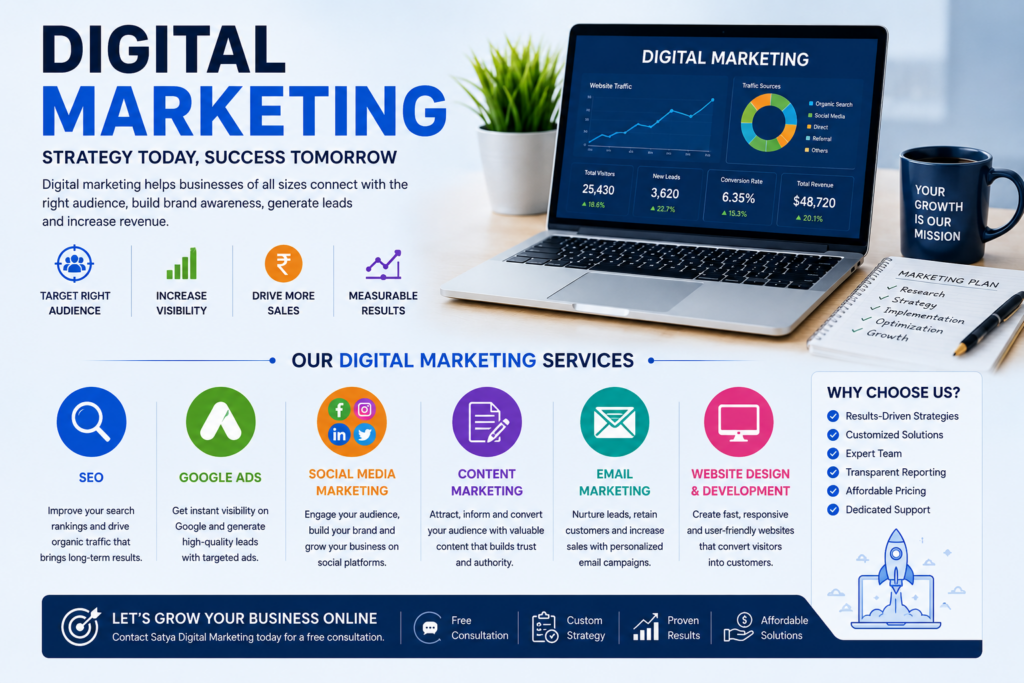
Table of Contents
- What is Digital Marketing?
- Why Digital Marketing Is Important
- Major Types of Digital Marketing
- Search Engine Optimization (SEO)
- Pay-Per-Click Advertising (PPC)
- Social Media Marketing
- Content Marketing
- Email Marketing
- Website Development and User Experience
- Artificial Intelligence in Digital Marketing
- Benefits of Digital Marketing
- Practical Examples
- Common Mistakes to Avoid
- Expert Tips and Best Practices
- Frequently Asked Questions
- Conclusion
What is Digital Marketing? Complete Guide (2026)
Digital marketing refers to the promotion of products, services, or brands through digital channels such as search engines, websites, social media platforms, email, mobile applications, and online advertising networks.
The primary goal of digital marketing is to connect businesses with potential customers where they spend most of their time—online.
Unlike traditional marketing, digital marketing allows businesses to:
- Target specific audiences
- Measure campaign performance
- Optimize strategies in real time
- Generate leads efficiently
- Improve return on investment (ROI)
Digital marketing combines technology, creativity, analytics, and strategy to help businesses achieve measurable results.
Why Digital Marketing is Important
Consumer behavior has changed dramatically over the past decade. Before purchasing a product or service, people typically:
- Search on Google
- Read reviews
- Visit websites
- Compare competitors
- Watch videos
- Check social media profiles
If your business does not have a strong online presence, you may lose potential customers to competitors who do.
Digital marketing helps businesses:
- Reach larger audiences
- Generate qualified leads
- Increase brand visibility
- Build customer trust
- Improve customer engagement
- Increase sales and revenue
Major Types of Digital Marketing
Digital marketing consists of several interconnected channels.
Search Engine Optimization (SEO)
SEO is the process of improving a website’s visibility in search engine results.
The goal is to rank higher on Google when people search for relevant keywords.
Examples:
- Digital marketing services
- SEO expert near me
- Website development company
Key SEO Activities
- Keyword research
- On-page optimization
- Technical SEO
- Link building
- Local SEO
- Content optimization
SEO is a long-term strategy that provides sustainable organic traffic.
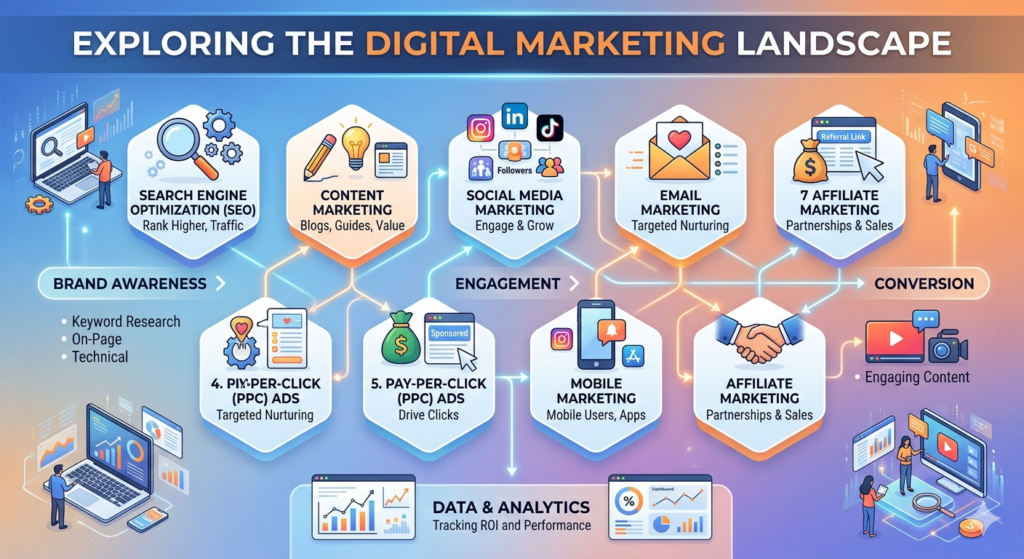
Pay-Per-Click Advertising (PPC)
PPC advertising allows businesses to appear at the top of search engine results instantly.
Popular PPC platforms include:
- Google Ads
- Microsoft Ads
- Meta Ads
- LinkedIn Ads
Benefits of PPC
- Immediate visibility
- Highly targeted audience
- Measurable performance
- Flexible budgets
- Fast lead generation
Businesses only pay when users click on their advertisements.
Social Media Marketing
Social media platforms have become essential marketing channels.
Popular platforms include:
- X
- YouTube
Goals of Social Media Marketing
- Build brand awareness
- Increase engagement
- Generate leads
- Drive website traffic
- Improve customer relationships
Successful social media marketing focuses on providing value rather than constantly selling products.
Content Marketing
Content marketing involves creating valuable content that educates, informs, and helps potential customers.
Examples include:
- Blog posts
- Videos
- Infographics
- E-books
- Case studies
- Podcasts
Why Content Marketing Matters
Quality content:
- Improves SEO
- Builds trust
- Demonstrates expertise
- Generates leads
- Supports social media campaigns
Businesses that consistently publish valuable content often establish themselves as industry authorities.
Email Marketing
Email marketing remains one of the highest ROI marketing channels available.
It allows businesses to communicate directly with prospects and customers.
Examples:
- Newsletters
- Promotional offers
- Product updates
- Educational content
- Customer retention campaigns
Benefits
- Personalized communication
- High conversion rates
- Cost-effective marketing
- Customer retention
A strong email strategy helps businesses nurture leads throughout the customer journey.
Website Development and User Experience
Your website serves as the foundation of your digital marketing efforts.
Even the best marketing campaigns can fail if your website is poorly designed.
Essential Website Features
- Mobile responsiveness
- Fast loading speed
- Clear navigation
- Professional design
- Strong calls-to-action
- Secure HTTPS connection
A user-friendly website improves engagement and conversions.
Artificial Intelligence in Digital Marketing
Artificial intelligence is transforming DM.
AI tools help marketers:
- Generate content ideas
- Analyze customer behavior
- Automate repetitive tasks
- Optimize advertising campaigns
- Improve personalization
While AI improves efficiency, human expertise remains essential for strategy, creativity, and relationship building.
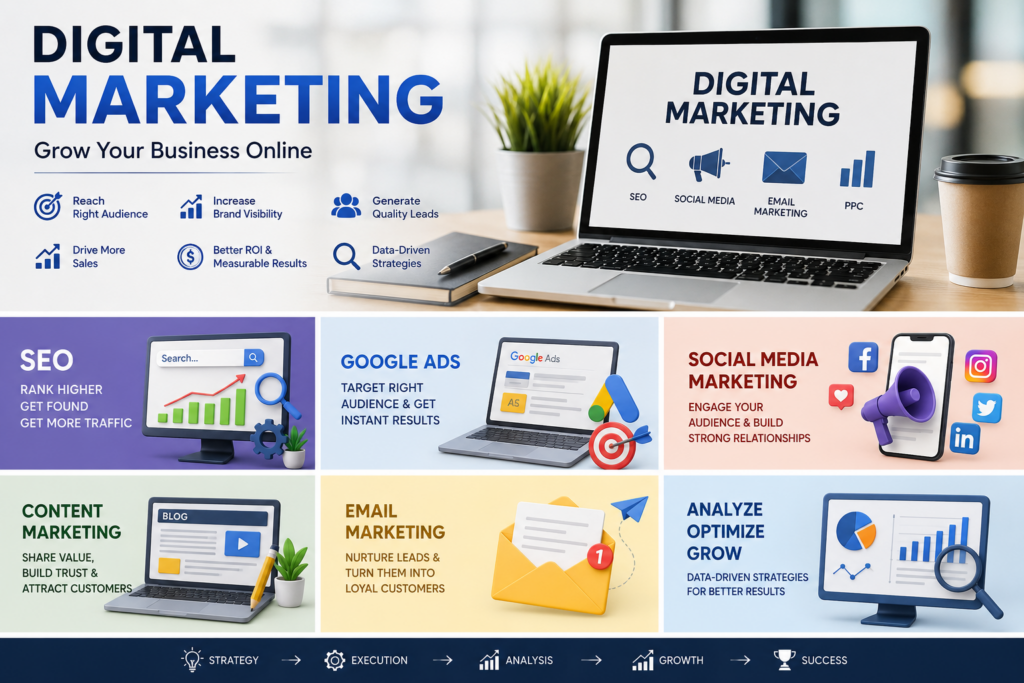
Benefits of Digital Marketing
Increased Visibility
Businesses can reach customers beyond their local geographic area.
Better Targeting
Digital platforms allow precise audience targeting based on:
- Demographics
- Interests
- Behavior
- Location
Measurable Results
Businesses can track:
- Website traffic
- Leads
- Sales
- Conversions
- Return on investment
Cost-Effective Marketing
Compared to traditional advertising, digital marketing often provides higher returns with lower investment.
Practical Example
Imagine a local interior design company.
Without Digital Marketing
- Relies on referrals
- Limited visibility
- Slow business growth
With Digital Marketing
- SEO ranks website on Google
- Google Ads generate immediate leads
- Social media showcases projects
- Blogs build authority
- Email campaigns nurture prospects
Result:
More inquiries, more consultations, and increased revenue.
Common Mistakes to Avoid
Many businesses struggle because they make avoidable mistakes.
Ignoring SEO
Without SEO, your website may never reach its full potential.
Not Tracking Results
Data-driven decisions lead to better outcomes.
Inconsistent Branding
Consistency builds trust.
Poor Website Experience
Slow websites reduce conversions.
Posting Without Strategy
Every piece of content should support business goals.
Expert Tips and Best Practices
Focus on Customer Needs
Create content that solves real problems.
Prioritize Local SEO
Especially important for local businesses.
Invest in High-Quality Content
Quality consistently outperforms quantity.
Use Analytics
Monitor performance regularly.
Optimize for Mobile
Mobile traffic continues to dominate online activity.
Build Trust
Show testimonials, case studies, and client success stories.
Frequently Asked Questions
What is digital marketing?
Digital marketing is the promotion of products and services through online channels such as search engines, websites, social media, and email.
Is it suitable for small businesses?
Yes. It helps small businesses compete effectively with larger competitors.
How long does SEO take?
SEO typically requires three to six months to show significant results.
Which DM channel is best?
The best channel depends on your goals, industry, and target audience.
Is Google Ads better than SEO?
Both have advantages. SEO provides long-term traffic, while Google Ads delivers immediate visibility.
How much should a business invest in the Online Marketing?
Budgets vary depending on business size, objectives, and competition.
Conclusion
Digital Advertising has become an essential component of business growth in the modern world. It enables businesses to connect with customers, build brand awareness, generate leads, and increase revenue through measurable and cost-effective strategies.
Whether you focus on SEO, Google Ads, social media marketing, content marketing, or website optimization, success comes from implementing a well-planned strategy that prioritizes customer needs and delivers consistent value.
Businesses that embrace digital advertising today will be better positioned to compete, grow, and succeed in the future.
Ready to Grow Your Business?
If you’re looking to improve your online presence, generate more leads, and increase sales, Satya Digital Marketing can help.
Contact us today for a personalized digital marketing consultation and discover how strategic online marketing can accelerate your business growth.
Hope you can get an idea now: What is Digital Marketing? Complete Guide 2026. Thank You